The Tatev Monastery is considered one of the finest examples of medieval Armenian architecture. Built between the 9th and 13th centuries in a remote mountainous area, the monastery is not always easy for tourists to reach. However, travelers who appreciate unique historical landmarks usually consider the journey well worth the effort.
- General information
- Main structures of the complex
- History of the Monastery
- Tatev Cable Car
- Opening Hours
- Ticket Prices
- How to Get There
General information
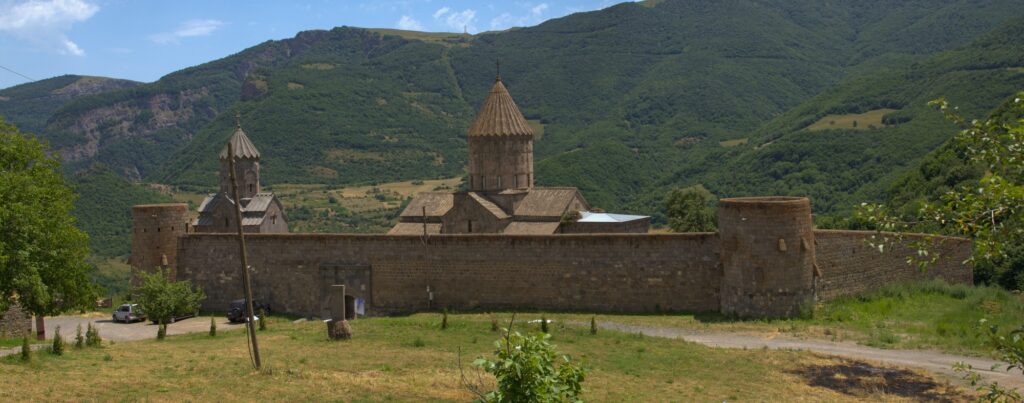
The monastery stands in the center of Syunik Province, near the village of Tatev. The complex rises on a high rocky plateau above the right bank of the Vorotan River. Traditionally, visitors had to descend into the 500-meter Vorotan Gorge, stop at the natural formation known as the Devil’s Bridge, famous for its warm mineral springs, and then climb a winding mountain road. After several turns the monastery appears, immediately impressing visitors with its powerful fortress-like walls.
The isolated location had clear strategic advantages. In the Middle Ages the monastery served not only as a religious center but also as an important political hub of the Syunik principality. It functioned as the residence of the Syunik metropolitan and collected taxes from hundreds of surrounding villages. The monastery also controlled extensive lands and craft workshops.
Several legends explain the origin of the monastery’s name. One version links it to Saint Eustathius, a disciple of Thaddeus the Apostle. Both are believed to have suffered martyrdom in the Syunik region. Another explanation connects the name with the Old Armenian phrase meaning “give wings.” From the valley below, the monastery seems to stretch toward the sky, and its walls appear to continue the cliffs on which it stands. According to another legend, the architect stepped into the abyss after completing the construction, saying: “Holy Spirit, give me wings.” A different interpretation suggests that anyone entering the monastery symbolically gains wings, leaving behind sins and suffering.
Today the monastery no longer plays the same political role as in the past, but it remains open to visitors and continues to attract travelers interested in Armenian history and culture.
Main structures of the complex
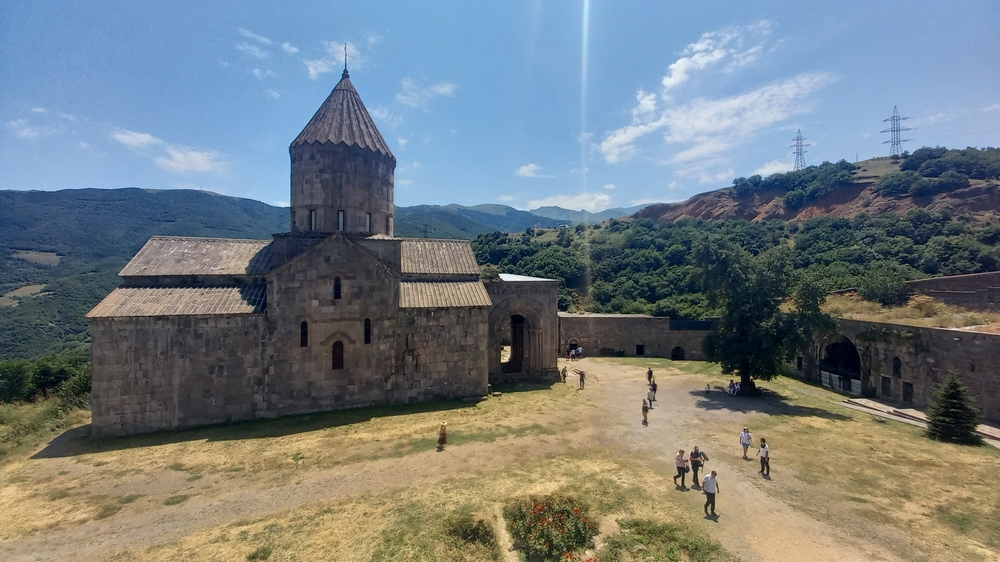
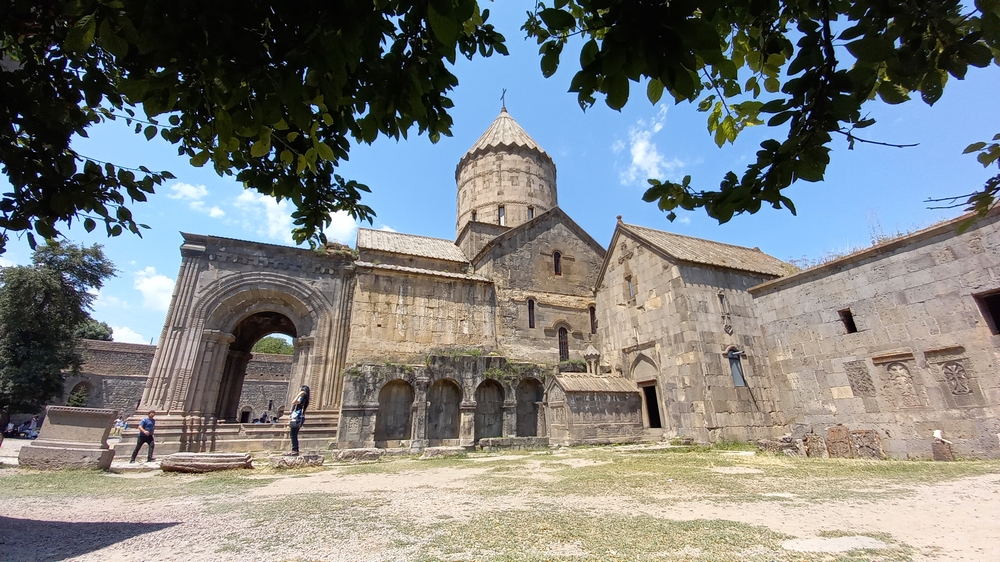
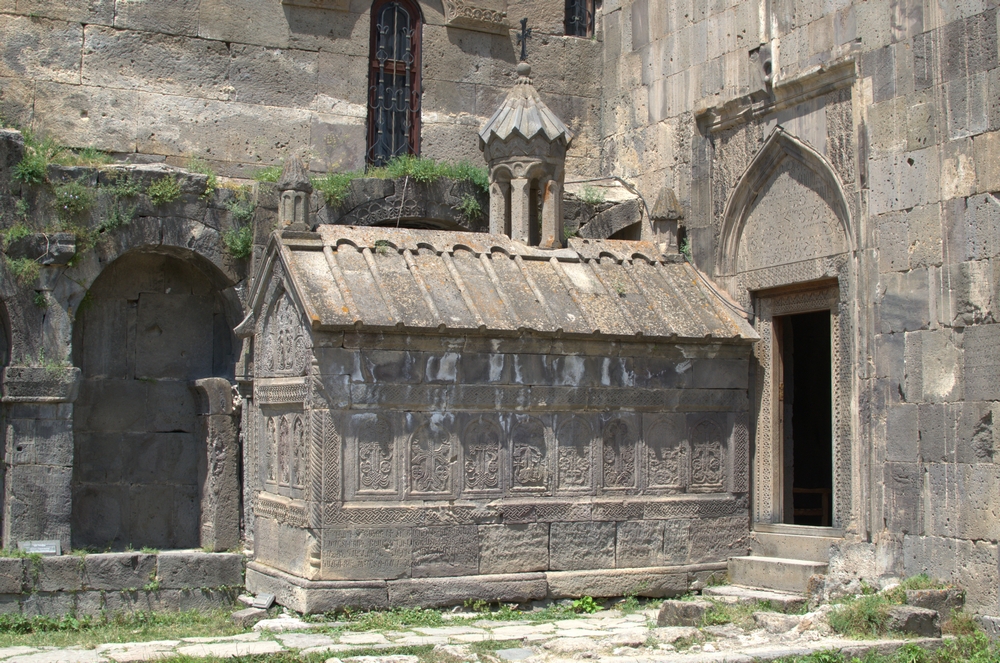
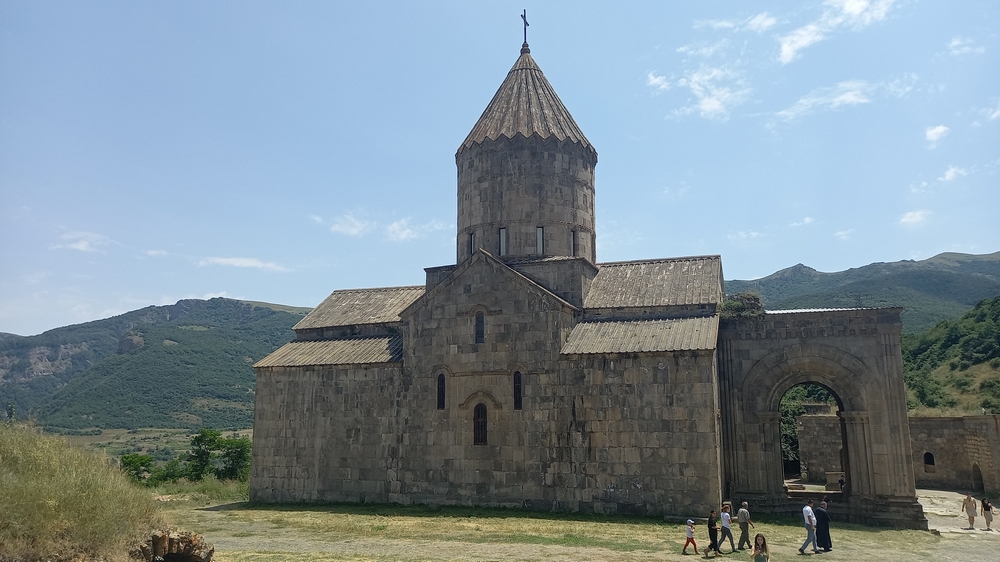
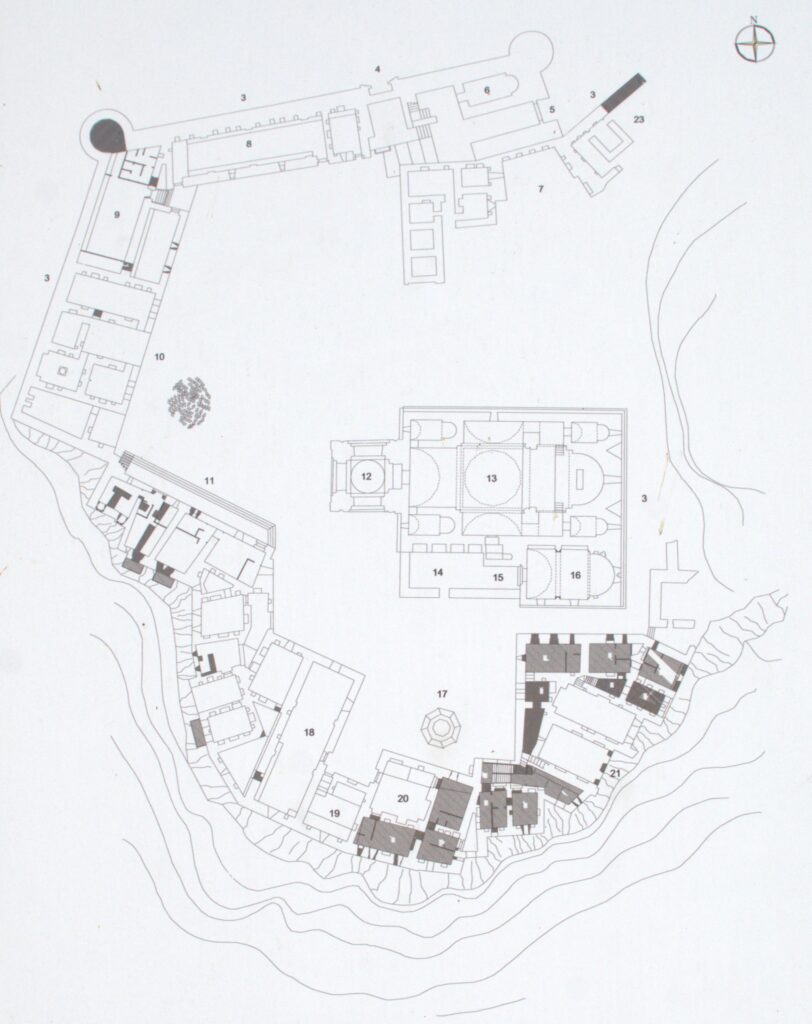
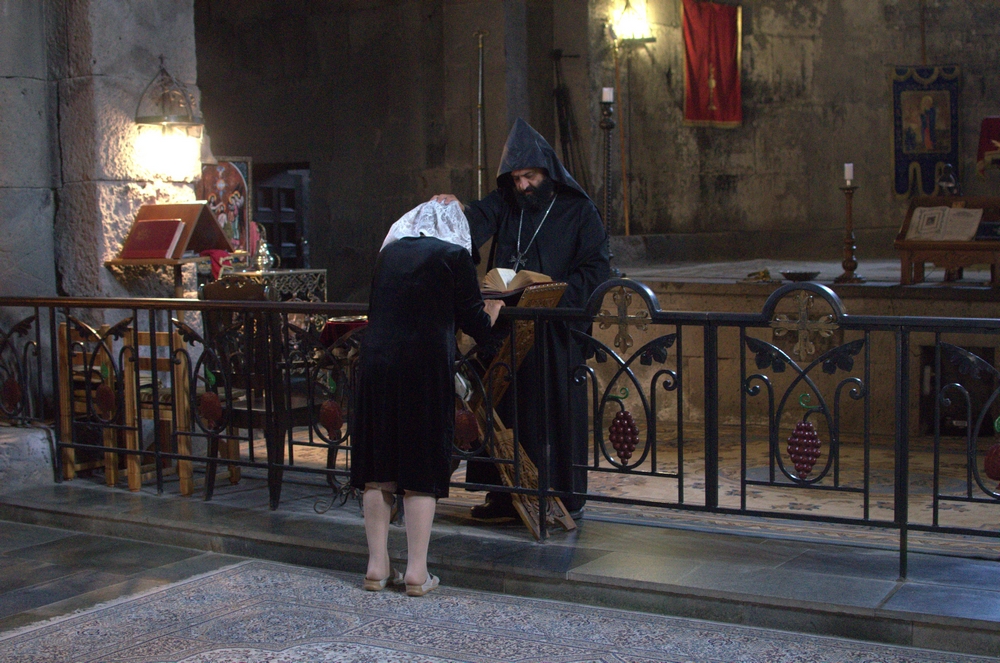
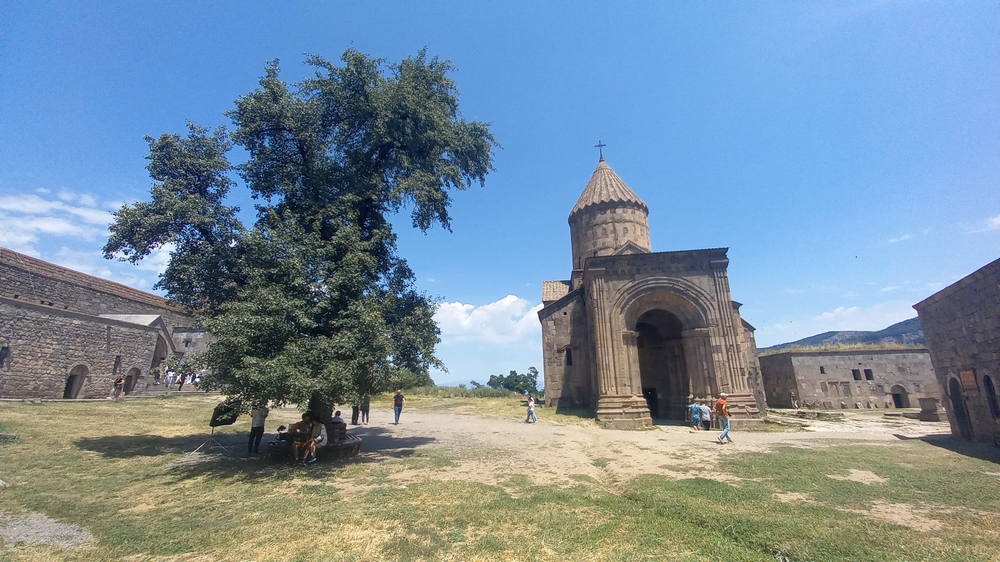
The architectural ensemble of the monastery is impressive in scale and harmony. At its center stands the Church of Saints Peter and Paul Church Tatev, the largest and most important building of the complex. Rising above a solid stone base, the cathedral gives the entire ensemble a monumental appearance.
The structure may look somewhat archaic, yet it also displays refined architectural elements. Visitors often notice the powerful shapes of the church and its distinctive umbrella-shaped domes. The windows feature relief carvings of human faces with snakes turning their heads toward them and extending their tongues. In some parts of the cathedral, traces of ancient frescoes are still visible.
The oldest structure within the complex is the Church of Gregory the Illuminator, built in 848 by Prince Pilipos of Syunik, who also donated the village of Tatev to the monastery. This church stands on the southern side of the main cathedral.
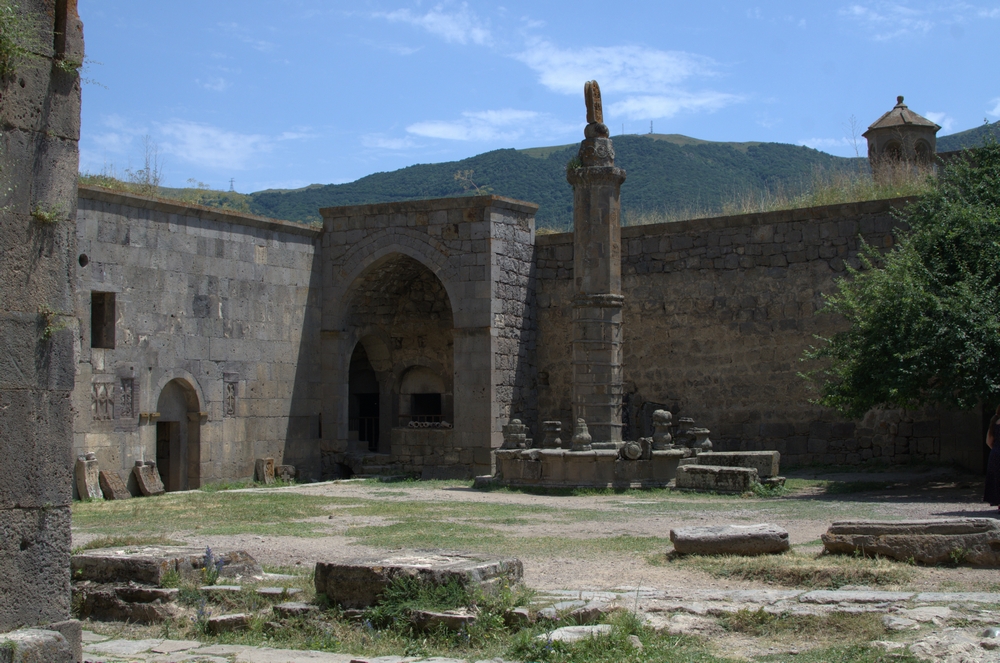
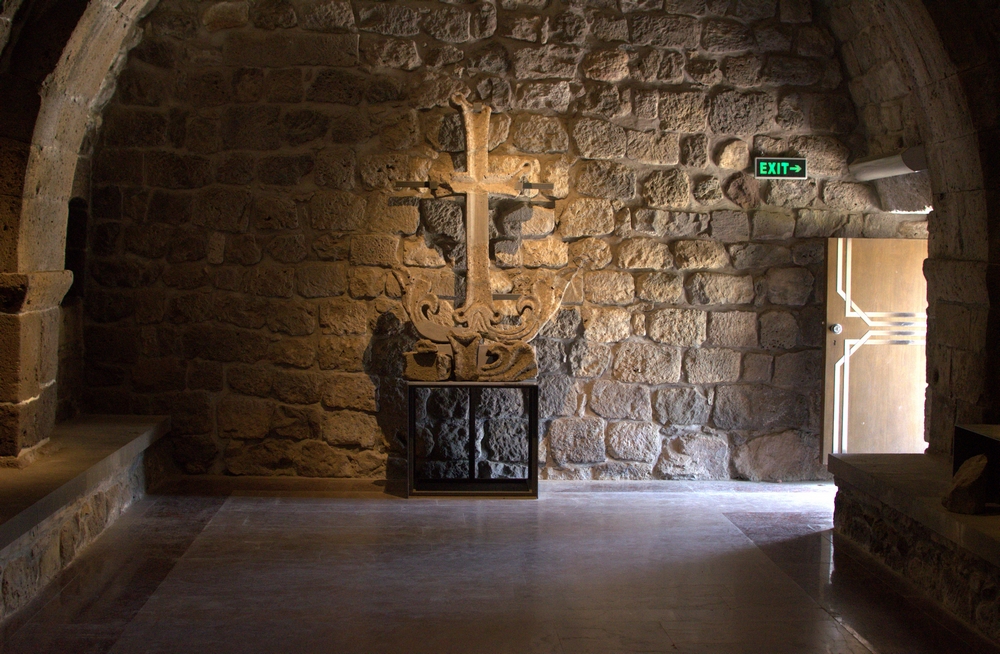
Another notable monument is the famous Gavazan, also known as the “Staff,” erected in 904 near the monks’ living quarters. Built from small stones, it takes the form of an eight-sided column about eight meters high. An ornamental cornice crowns the column, and above it stands a traditional Armenian Khachkar.
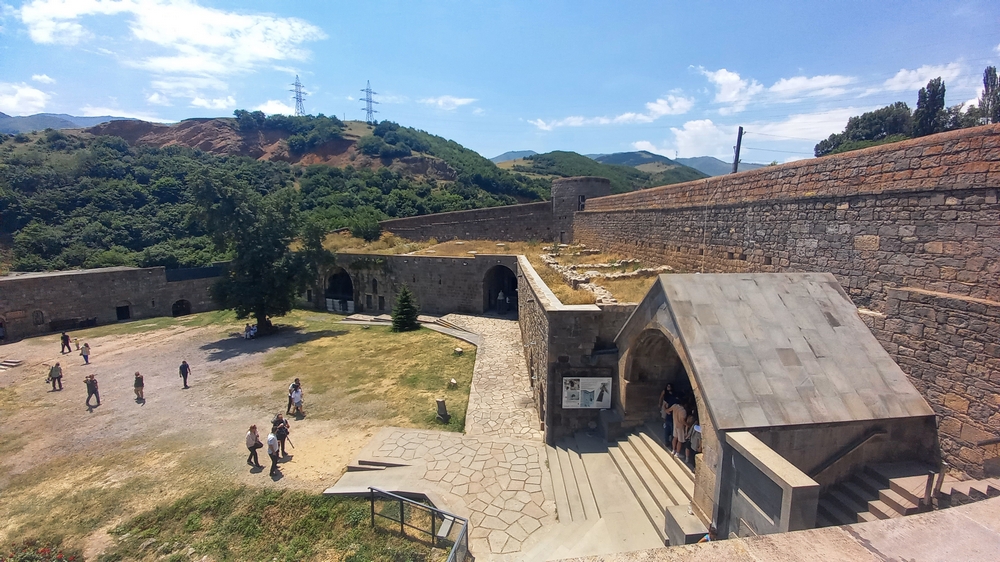
Tourists also visit the Church of Holy Mother of God Church Tatev, a small domed hall with niches. Each façade, except the western side, features a pointed umbrella-style roof. Nearby stand other monastery buildings constructed in the 17th–18th centuries, including the abbot’s residence, a refectory with a kitchen, living quarters, a bell tower, and storage rooms.
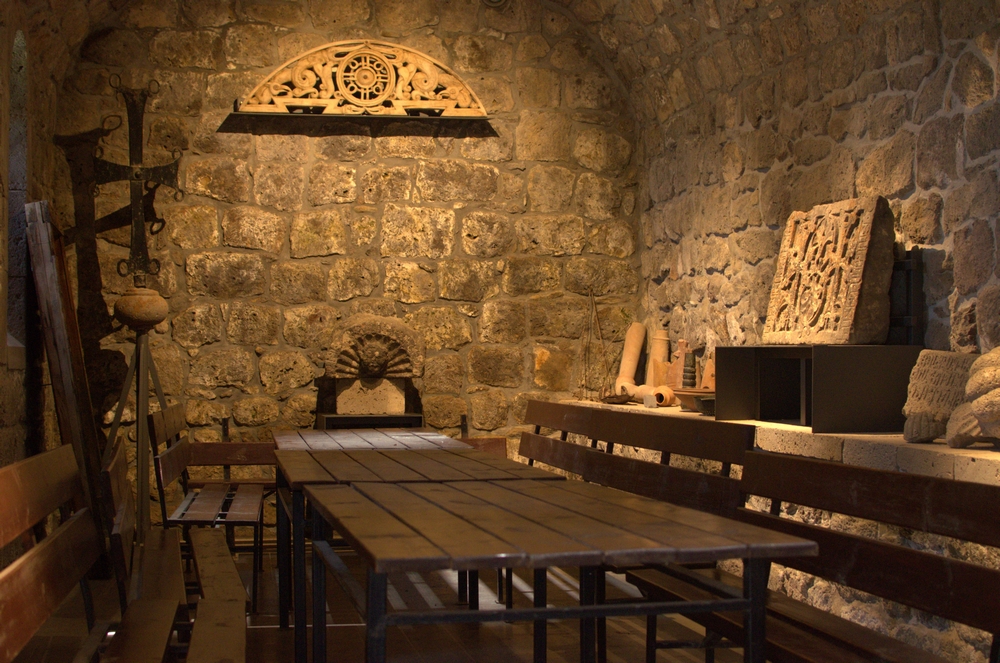
Perched high above the mountains, Tatev seems to hover over the landscape and often surprises first-time visitors. Narrow passages lead from large halls into smaller mysterious rooms, stone staircases connect different levels, and arched openings sometimes appear to lead directly into the void. This unique atmosphere fascinates travelers and leaves a lasting impression long after the visit.
History of the Monastery
At the time of its foundation, Tatev Monastery consisted of only one church and a small community of monks. In the 10th century the Syunik Metropolitanate moved to the monastery, which significantly expanded its influence and property.
By the end of the 11th century, the Cathedral of Saints Peter and Paul Church Tatev had been built, along with two additional churches dedicated to the Holy Mother of God and Gregory the Illuminator. At the same time, builders added a guesthouse for pilgrims and several other monastery buildings. The number of monks increased to about 500. During this period the monastery repeatedly suffered from foreign invasions and occasional earthquakes.
When the Orbelyan dynasty came to power, they began restoring the damaged parts of the monastery. As a result, the 13th and 14th centuries became a time of remarkable prosperity. During this period the Tatev University operated on the monastery grounds and became one of the most important centers of philosophy and science in medieval Armenia.
The monastic community grew to nearly 1,000 members. The university built an extensive library known as a Matenadaran, which stored thousands of manuscripts. The monastery also kept a large collection of sacred relics, reportedly including relics associated with the Holy Mother of God.
In 1387 the monastery suffered a devastating invasion by Timur. During the attack, the rich manuscript repository containing thousands of documents was burned and looted. A century later nomadic tribes further devastated the region, forcing the monastery leader Shmavon and the monks to relocate to Sanahin Monastery.
By the end of the 19th century the monastery owned only nine villages, and its community had shrunk dramatically. At that time only the abbot, several vardapets, a few clerics, and several servants remained at the site.
A powerful earthquake in 1931 almost completely destroyed the monastery complex. Restoration works took place later, and the main buildings were reconstructed between 1974 and 1998.
Tatev Cable Car
The cable car known as Wings of Tatev now carries visitors to one of the most famous historical and natural landmarks of the Syunik region.
In 2009 the National Competitiveness Foundation of Armenia approved the “Revival of Tatev” program. The project aimed to restore the monastery’s damaged architectural monuments and develop tourism infrastructure in the area. Construction of the cable car became the first stage of the project.
In October 2010 the cable car officially opened and immediately entered the Guinness World Records as the longest reversible aerial tramway in the world.
Today visitors can reach the monastery in about 12 minutes by air. The distance between the two stations is 5,752 meters. The route was carefully designed to follow the natural landscape, allowing passengers to admire both historical and natural attractions from a height of about 320 meters, including the Devil’s Bridge and the Tatev Hermitage.
Each passenger cabin holds up to 25 people and offers panoramic views of the surrounding mountains and the Vorotan Gorge. When the cabin begins moving, passengers often feel as if they are flying through the sky, which inspired the cable car’s name.
The cable car complex also provides comfortable visitor facilities. There is a large parking area, as well as a restaurant where guests can wait for their ride or enjoy coffee while looking out over the mountains. Observation decks feature telescopes that allow visitors to view the canyon in detail. Tickets can be purchased at the station, and mobile communication is available there as well.

Opening Hours
- December 1 – February 29: Tuesday–Sunday, 10:00–17:45
- September – November, March – April: Tuesday–Sunday, 11:00–18:00
- May 1 – May 31: Tuesday–Sunday, 10:30–19:00
- June 1 – June 30: Tuesday–Sunday, 11:00–18:00
- July 1 – August 31: daily, 11:00–18:00
Ticket Prices
Entrance to the monastery is free, but if you plan to get there by cable car you need a ticket.
One-way ticket:
- March–November — 6500 AMD
- December–February — 4000 AMD
Round-trip ticket:
- March–November — 9000 AMD
- December–February — 5500 AMD
Other options:
- Children under 110 cm — 1000 AMD
- Audio guide — 2000 AMD
- Tatev tours — 1000 AMD per person
- Guided excursions — from 10,000 AMD per group
How to Get There
Travelers can reach the turnoff to the monastery from Yerevan by taking a bus running on the Yerevan–Stepanakert route.
Another option is to order a taxi from any hotel or hostel to the city of Goris.
The cable car station is located in the Syunik Province, about 250 kilometers south of Yerevan. From there visitors can reach the Wings of Tatev station by taxi, private transfer, or rental car. The journey from the capital usually takes about 3.5–4 hours.