Thanks to its many attractions, the Kotayk region is the center of recreation and tourism in Armenia.
It is one of the most picturesque and culturally rich regions of Armenia, located in the heart of the country. This region attracts tourists and researchers with its history, nature, and unique architectural monuments.
History
The history of the Kotayk region dates back to ancient times. Archaeological evidence of settlements dating back to the Bronze Age has been found in this area. It is particularly interesting that the region played an important role in trade and cultural exchange between different peoples and civilizations in the Caucasus. One of the most important historical periods for the region was the early Christian era. Armenia was the first country in the world to officially adopt Christianity as its state religion in 301. Important early Christian monuments have been preserved in Kotayk, which still attract pilgrims and historians.
Culture and traditions
The region is famous for its folk art, music, and crafts. Traditional dances and songs are popular here and are often performed at various festivals and folk celebrations. Armenian folk dances, such as the “koh” and “yarkhusta,” have deep roots in the culture of this region and are often accompanied by folk instruments such as the duduk and zurna. The Kotayk region is also known for its craft traditions. One of the most popular crafts is carpet weaving. Carpets made in this region are distinguished by their high density of patterns, bright colors, and unique ornaments, in which elements of ancient symbols and motifs can be seen.
The Kotayk region of Armenia is a unique region that combines a rich history, amazing natural landscapes, and cultural heritage. Monasteries and temples, majestic mountains and gorges, traditions and folk crafts make this region not only attractive to tourists but also important for the whole country.
What to do in Kotayk
Hippodrome
The Kotayk region is rich in hippodromes. There are several dozen of them here. In ancient times, horses played a huge role in the life of the Armenian people. The royal cavalry brought many victories. Armenia delivered horses to the West and East, to India and China, along the Great Silk Road. The horses bred for military operations were especially famous. The Armenians’ love for thoroughbred stallions has survived to this day. Based on excavations, scientists have established that in ancient times there were also female warriors in the Armenian cavalry. Horse riding is popular not only in the Kotayk region, but also throughout Armenia. Interacting with horses is definitely calming.
Cosmetics factory
There have always been legends about the beauty of Armenian queens. This is because they loved to take care of themselves. Ancient beauty recipes form the basis of modern cosmetics. In the Kotayk region, you can see for yourself that domestic products are in no way inferior to foreign ones. A cosmetics factory is located on the slope of Mount Ara, at an altitude of 1,600 meters. This is the best place to grow medicinal herbs and fragrant flowers: 300 sunny days a year, mineral-rich volcanic soil, and a favorable climate.
“We grow Damask roses on an area of 4 hectares, 1 hectare of lemon balm, lavender, calendula, and much, much more. From all this, we obtain essential oils and more. In the highlands, biological activity is higher and richer,” says company director David Oganesyan.
The components are so environmentally friendly that you can taste them. The main process takes place in special huge containers. Rose petals are poured into them and the essential oil is literally evaporated with hot steam. The process lasts five hours! 250 kilograms of petals were poured in, and only 30 grams of essential oil were obtained! It is then added drop by drop to cosmetics. In this case, to toner — a facial care product.
Extinct volcano
The extinct volcano Gutanasar is hidden from view in the Kotayk region. It is very beautiful. But the road there is difficult, so we need special transport. You can get there by SUV. A couple of years ago, no one knew about this place, but now it is one of the favorite spots for photographers. The landscapes in the photos turn out fantastic. Travel agencies operate in this direction daily.
Gutanasar is considered a new tourist destination, but it has already become popular. After a 15-minute ride on ATVs, the black, undulating wall of Gutanasar rises before us! Gutanasar is an extinct three-headed volcano. It is located in the center of the Kotayk region. The volcano is part of the Geghama Highlands, although it is distant from other mountain peaks. “Guthan” means plow, because the folds of the northern slope look like furrows. From above, there is a view of the mountains of Atis, Ara, Aragats and, of course, Ararat.
Where to go in Kotayk
Garni Temple
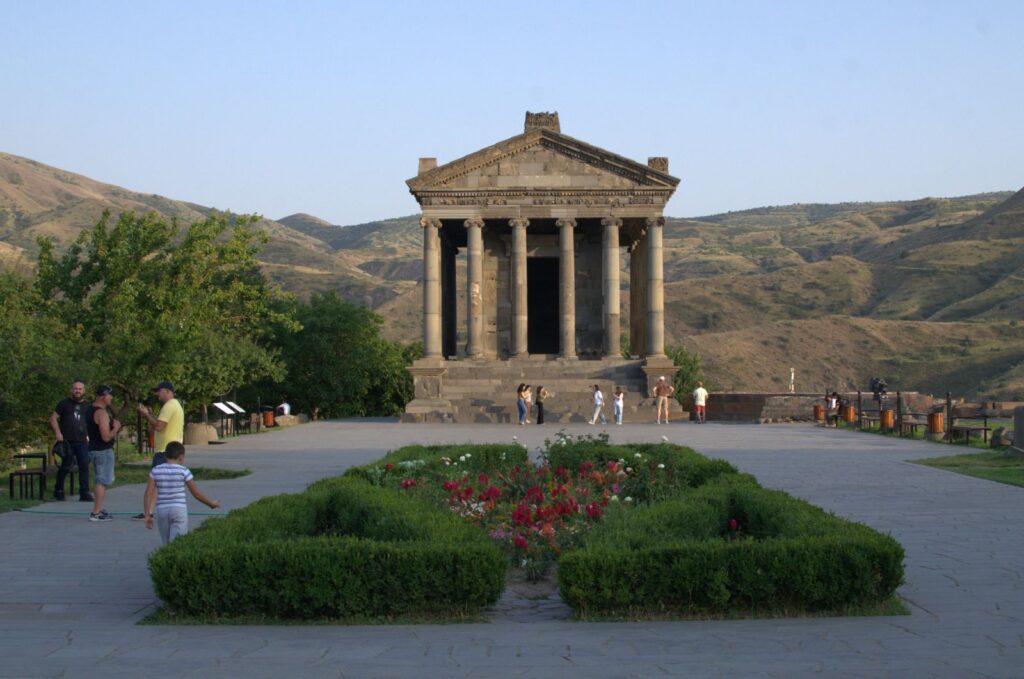
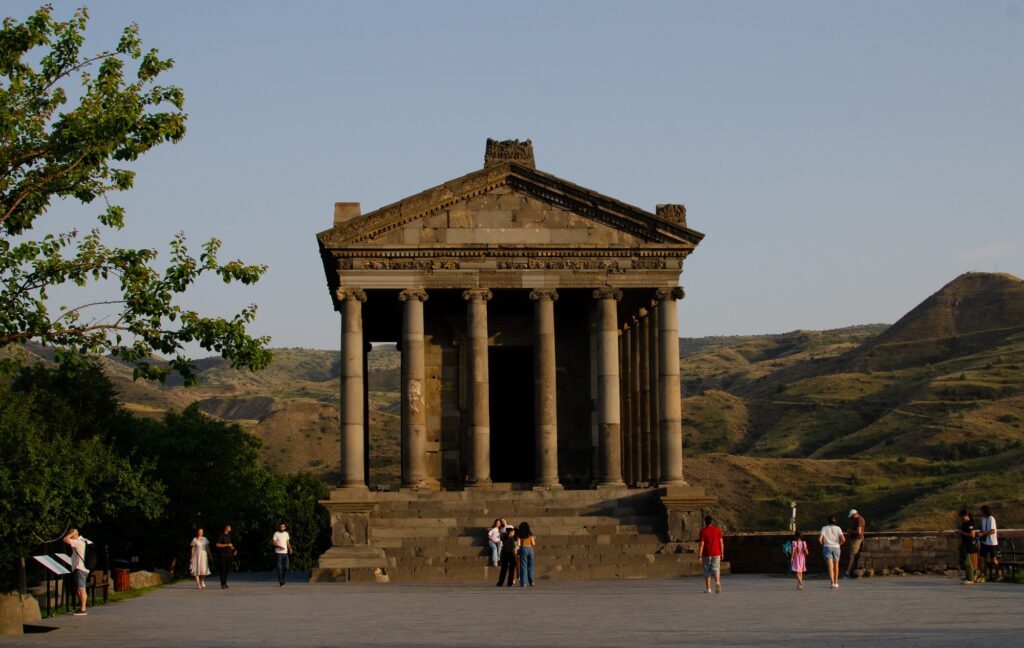
Less than 30 km east of Yerevan, at the foot of the Geghama Mountains, not far from the village of Garni, is one of the most popular tourist destinations — the Garni architectural complex (on the upper photo), which has a history dating back more than 2,000 years. The Garni Fortress was built as a defensive structure. From the 3rd century BC, it served this purpose for a thousand years. However, in 59 AD, it was destroyed by Roman legionnaires, but in 76-77 AD, King Trdat restored it, as evidenced by a cuneiform inscription in Greek. From the 2nd century, the citadel became a kind of summer residence for Armenian kings, who valued this region for its special climate, among other things.
There was a palace in the central part of the fortress. From the surviving fragments, it can be determined that it consisted of ten rooms, a room for storing and processing grapes, and a wine cellar. Not far from it, you can see the royal baths with beautiful mosaic floors. The main place in the complex is occupied by the pre-Christian temple of Garni (Temple of the Sun), 1st century AD — the only surviving monument of the Hellenistic era in Armenia. It was almost completely destroyed by a strong earthquake in 1679. It was restored in 1966–1976.
Geghard Monastery
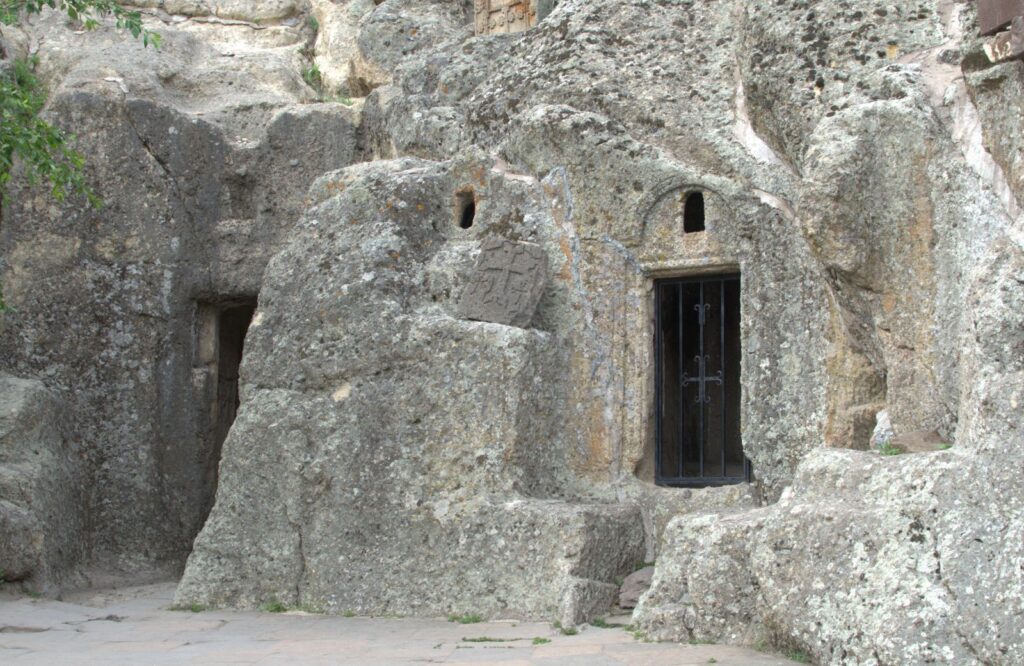
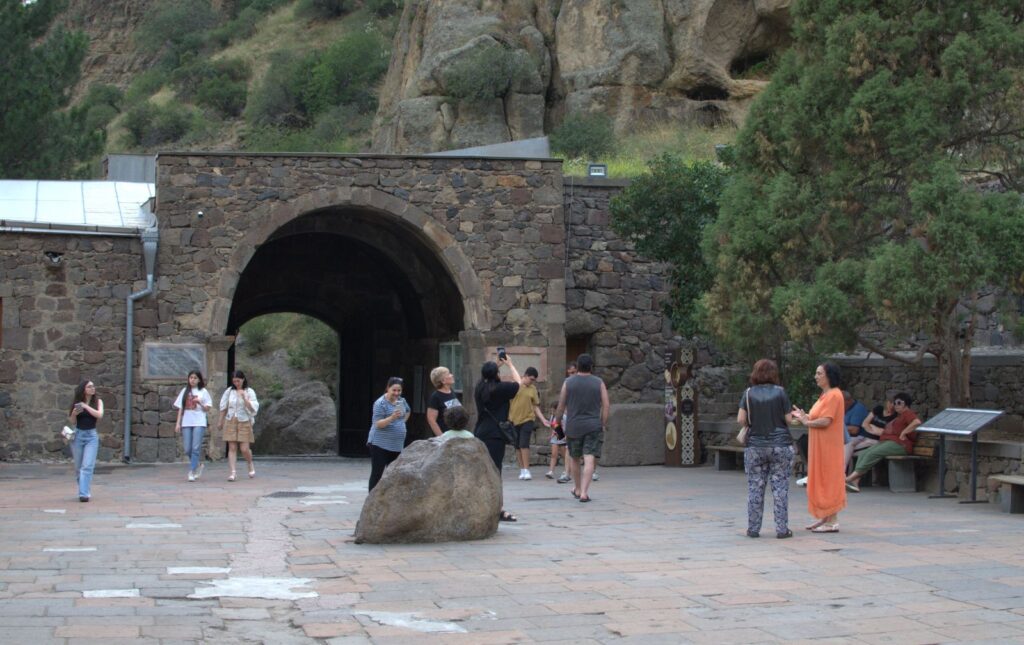
Seven kilometers from Garni is another famous landmark — the Geghard Monastery complex, located in the gorge of the mountain river Gokht (a right tributary of the Azat River). In 2000, the monastery was included in the UNESCO World Heritage List.
Some of the churches of Geghard are carved directly into the rocks, while others are built in the open air. Khachkars are carved on the walls throughout the complex.
In one of the caves, spring water, considered sacred, has been flowing since ancient times. It was near this spring that the Ayrivank (“cave monastery”) was built at the beginning of the 4th century. Church tradition says that this is where the legendary spear (gegarad) that the Roman soldier Longinus pierced the body of Jesus Christ on the cross was kept, so the monastery was renamed Geghardavank. Along with other relics, it was brought to Armenia by the apostle Thaddeus. Initially, it was kept in the Echmiadzin monastery, then the relic was taken to remote Ayrivank for safety reasons. Since 1982, the spear has been kept in the Echmiadzin museum again.
The Surb Lusavorich Chapel, the oldest monument of the monastery complex, is located high in the mountains. Part of it is carved directly into the rock, fragments of frescoes have been preserved, as well as khachkars with ornate ornamentation.
The most revered church in the monastery is Katohike, founded in the early 13th century by the military leaders brothers Ivane and Zakare. The temple is built in the shape of a rectangle, with a two-story chapel in each corner. The walls inside are covered with numerous inscriptions about donations made to the monastery. On the southern facade, there is a gate with magnificent carvings. The tympanum depicts trees with pomegranates and bunches of grapes, and between the arch and the outer structure, there are doves. Above the gate, there is a scene symbolizing princely power: a lion attacking a bull.
Mashtots Ayrapet Church
The Church of Mashtots Hayrapet (Church of Patriarch Mashtots) is located in the village of Garni. It was built over the tomb of Catholicos of All Armenians Mashtots I Yegivardetsi, who in 876, during the Arab invasion, brought the treasures of the Echmiadzin Cathedral to Garni.
Catholicos Mashtots died and was buried here in Garni. North of the church is the catholicos’ tombstone.
The Mashtots Ayrapet Church is a traditional cross-domed structure made of red tuff, which has blackened over time. The facade of the church is decorated with bas-reliefs in the form of floral ornaments.
Next to the temple, there is a stone with carved images of birds, which is believed to have remained here from a pagan sanctuary. Khachkars are scattered around the Mashtots Hayrapet Church.
Tsaghkadzor Ski Resort
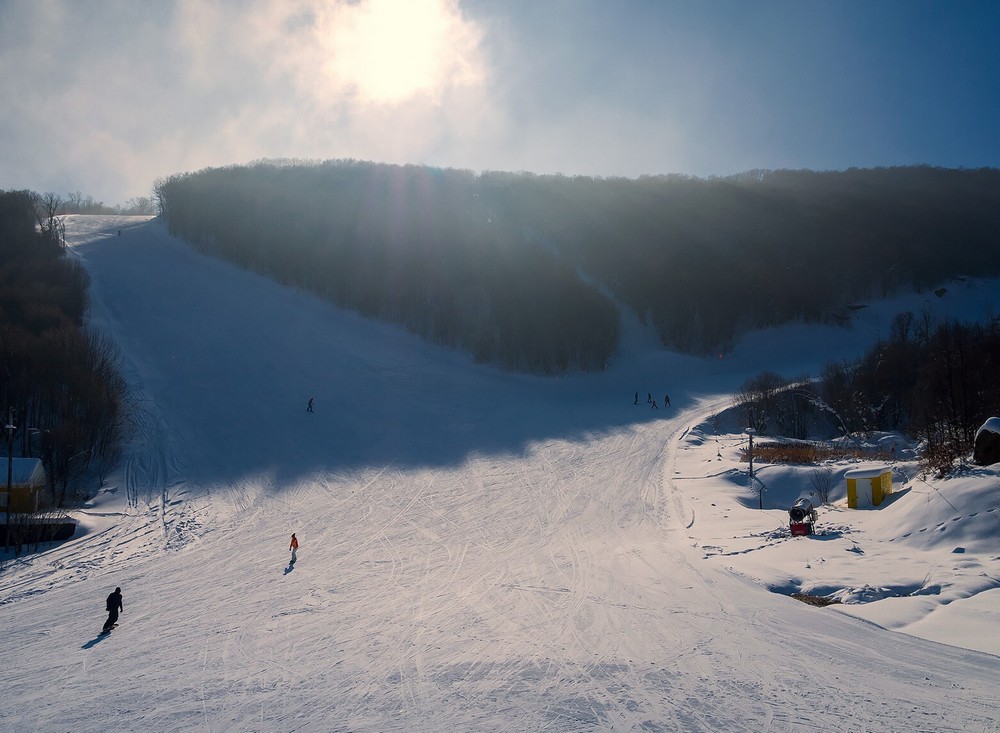
Tsaghkadzor Ski Resort is one of the most popular vacation spots among both Armenians and tourists. Tsaghkadzor is known for its mild climate and excellent skiing conditions. In the summer season, the resort becomes a great place for hiking, camping, and active sports.
We have a detailed article about the Tsaghkadzor resort, where we talk about the slopes, skiing experience, lifts, ski pass prices, and equipment rental. There you will also find webcams, good hotels right on the slopes, and other useful information.
Kecharis Monastery Complex
In the northwestern part of Tsaghkadzor, on the slope of the Pambak Range, is the Kecharis Monastery Complex. It was founded by the Pahlavuni princes in the 11th century, and construction continued until the middle of the 13th century. The Surb Grigor Lusavorich temple, the first building of the monastery, was erected in 1033 by Grigor Magistros. To the south stands the small church of Surb Nshan, also founded in the first half of the 11th century. Another building of the monastery, the Katogike Church, was erected in the first quarter of the 13th century by the architect Vetsik. A short distance from the monastery buildings stands the Church of the Resurrection, built in 1220. Several abbots of Kecharis are buried here.
Arzni Balneological Resort
Twenty-five kilometers from Yerevan, in the incredibly picturesque Hrazdan Gorge, lies the resort of Arzni, known far beyond Armenia for its healing springs and the bottling plant of the same name. There are interesting legends associated with this place. One of them says that Semiramis healed the wounds of Ara the Beautiful with the healing water of Arzni. According to another, during breaks between wars and campaigns, Tigran the Great regained his strength in Arzni. It is quite possible that these legends are not so far from reality. Arzni is truly a unique place. In terms of the number of clear days, the resort surpasses all similar resorts in the Caucasus. It has a mild climate, the cleanest mountain air, stable atmospheric pressure, and healing waters.
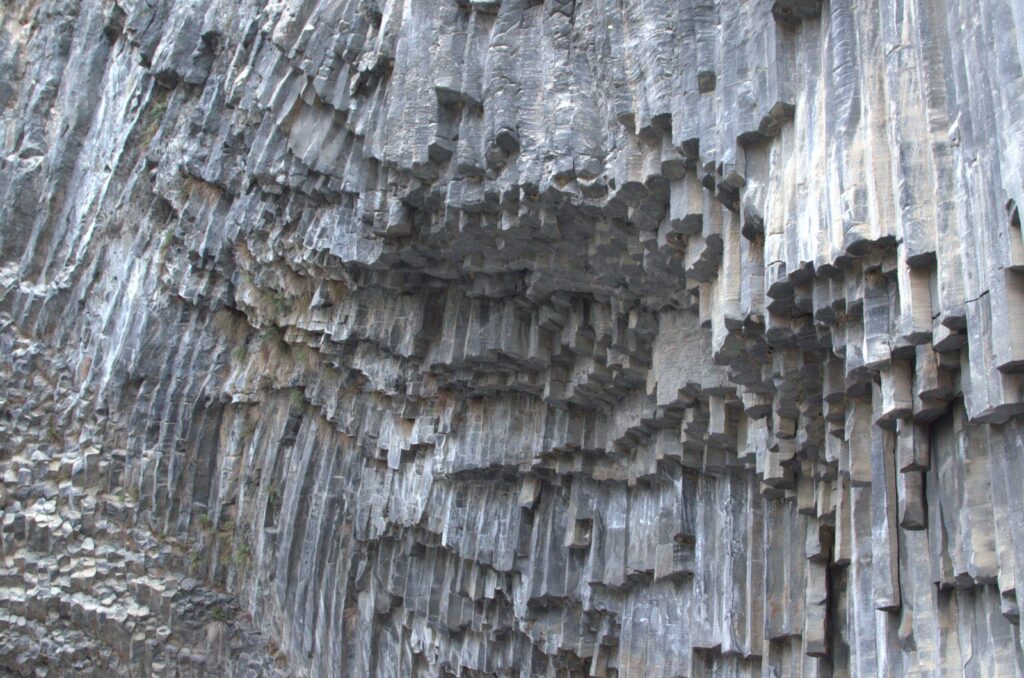
Garni Gorge and the Symphony of Stones
Garni Gorge is a natural monument known for its basalt columns, which form amazing geometric shapes. These basalt pillars, also called the “Symphony of Stones,” are one of the most impressive geological phenomena in Armenia.